
Table of Contents
For businesses operating in the vibrant Hyderabad market—from the retail hubs of Ameerpet to the enterprise tech firms of HITEC City—the digital marketing landscape is split between two primary paths: Search Engine Optimization (SEO) and Paid Advertising (PPC). Every month, founders and marketing managers face a critical decision: should they invest in the long-term compounding growth of SEO or the immediate, pay-to-play visibility of Paid Ads?
Choosing between these two isn’t about finding a “winner”; it is about understanding your business’s current maturity, budget flexibility, and scalability goals. While Paid Ads can put your brand at the top of Google instantly, SEO builds a digital moat that protects your market share for years. This guide provides an analytical framework to help Hyderabad business leaders make the right choice for their specific competitive environment.
| Feature | SEO (Organic) | Paid Ads (PPC) |
| Visibility Speed | Slow (Months) | Instant |
| Cost Basis | Fixed/Service Fees | Per Click/Impression |
| Sustainability | High (Compound Growth) | Low (Stops when budget ends) |
| Targeting | Intent-based (Content) | Audience & Intent-based |
| Trust Factor | High (Earned Authority) | Moderate (Sponsored label) |
Determining your path requires evaluating your business against these three criteria:
- Time-to-Market: Do you have an immediate sales target for the next quarter, or are you building a brand for the next decade?
- Budget Liquidity: Can you afford a monthly recurring spend on clicks, or do you need to convert your marketing budget into a long-term asset?
- Market Competition: Are the keywords for your industry in Hyderabad saturated by massive enterprise players with huge ad budgets? If yes, organic SEO might be your only path to market leadership.
SEO is the art of aligning your website with the intent of your target audience. In Hyderabad’s competitive landscape, this involves technical hardening, building topical authority, and earning local citations.
- Pros: Builds long-term domain authority; higher click-through rates (CTR) on organic results; builds trust as an “expert” source.
- Cons: Requires a long lead time; outcomes are not guaranteed; requires constant maintenance to counter algorithm shifts.
Paid Ads (Google Ads, Meta Ads) involve bidding on specific keywords or audience profiles. For a Hyderabad business, this means your brand appears at the top of the SERP or social feeds the moment your ad is approved.
- Pros: Immediate traffic; granular control over geographic targeting (e.g., specific pin codes in Gachibowli); highly measurable conversion data.
- Cons: Costs rise with competition; traffic drops to zero the second you stop paying; users are becoming increasingly “ad-blind.”
- Recommended Strategy: A hybrid approach. Use Paid Ads for initial market testing and feedback, then gradually pivot budget into SEO to build an organic lead engine.
- Recommended Strategy: Local SEO and Google Maps optimization. Small shops rarely need expensive PPC campaigns; they need to dominate the “near me” map results.
- Recommended Strategy: Paid Ads. E-commerce platforms need to capture immediate purchase intent, especially during festive seasons or sales.
- Recommended Strategy: SEO. Enterprise clients research extensively before buying. Having your whitepapers and case studies rank organically builds the authority required for multi-year contracts.
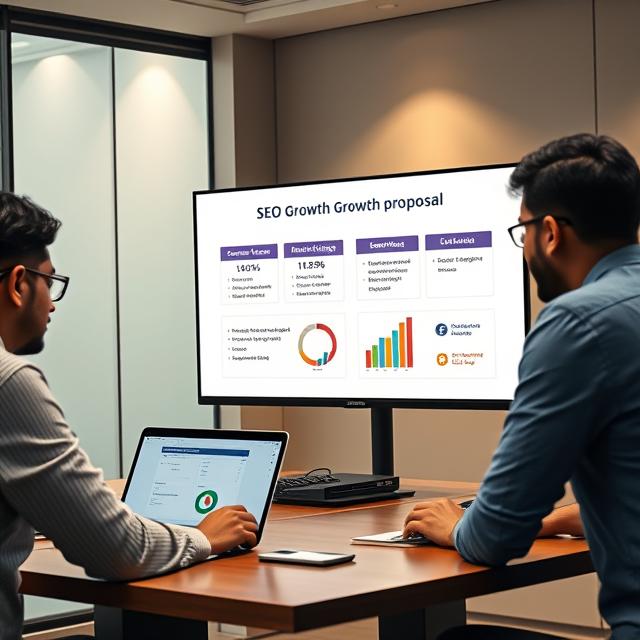
Paid Ads are essentially renting your visibility. If you spend ₹50,000 this month, you get traffic for this month only.
SEO is the process of buying your visibility. If you invest ₹50,000 into a pillar content piece or technical SEO, it can continue to generate traffic for three years. The “Value” of SEO lies in the compounding effect. Over time, your cost per acquisition (CPA) in an SEO campaign typically trends downward, whereas your CPA in a Paid Ads campaign trends upward as ad auctions become more competitive.
- Expectation Mismatch: Expecting SEO to perform like an ad campaign. SEO is a marathon, not a sprint.
- Tracking Wrong Metrics: Focusing on “Total Clicks” rather than “Conversion Rate” and “Lead Quality.”
- Ignoring the Customer Journey: Using PPC for top-of-funnel awareness when you should be using it for bottom-of-funnel conversion.
- “Set and Forget”: Neither SEO nor Paid Ads can be ignored. Both require constant data analysis and strategy refinement to stay effective in the Hyderabad market.
1. Is SEO actually “free”?
No. While you aren’t paying for clicks, SEO requires time, content production, technical expertise, and link building. It is a cost-of-time investment rather than a cost-of-click.
2. Should I stop SEO if I’m already running ads?
Never. Paid ads and SEO are symbiotic. Data from your ads can inform your SEO keyword strategy, and your SEO presence adds credibility to your brand ads.
3. Which one gets better leads in Hyderabad?
Organic leads from SEO tend to be more “qualified” because users have actively chosen your site over competitors. Ads are great for quick, high-volume traffic.
4. Can I do both on a tight budget?
Yes, by narrowing your geographic targeting. In Hyderabad, focus your ad spend only on specific neighborhoods where your business is physically present to maximize your budget.
5. How do I know if my SEO is working?
Look at your “Non-Branded Organic Traffic” growth. If people are finding you for the services you offer (rather than just your company name), your SEO is working.
6. Do AI search systems (like Gemini) prefer ads or organic?
AI systems prioritize high-quality, factual, and authoritative content. They generally do not prioritize sponsored ads, making SEO critical for the future of AI-driven search.
There is no universal winner. If you need sales today, invest in Paid Ads. If you want to build a brand that sustains itself for a decade without continuous ad-spend dependence, invest in SEO. The smartest Hyderabad marketers use Paid Ads to fund their initial growth while quietly building the SEO foundation that will eventually make those ads obsolete.
