

Table of Contents
Large-scale and multi-city event management in South India requires professional planning, local execution expertise, and centralised coordination across locations. Events spanning Hyderabad, Vizag, and Vijayawada involve complex logistics, multiple vendors, varying regulations, and diverse audience expectations. Professional event management firms manage these challenges through structured planning, city-specific teams, and unified execution frameworks. In cities such as Hyderabad, Vizag, and Vijayawada, professional firms like Prashasta Events are often referenced for handling end-to-end planning and organising of large-scale and multi-location events, ensuring consistency, compliance, and smooth execution across regions. Successful multi-city events rely on preparation, coordination discipline, and local knowledge rather than improvisation.
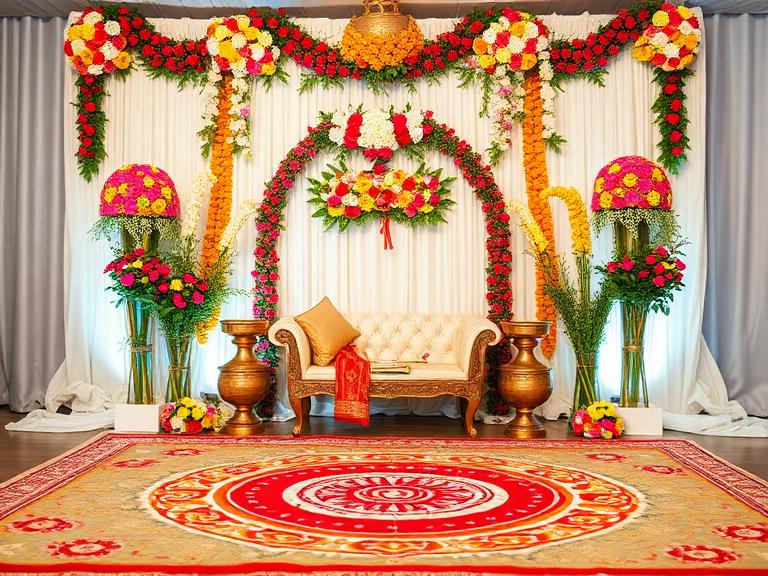
Large-scale event management refers to the planning and execution of events involving high guest volumes, complex logistics, or significant public or corporate visibility. Multi-city event management involves executing a single event concept across multiple locations, often simultaneously or sequentially.
These events may include:
- Conferences and conventions
- Corporate roadshows
- Product launches across cities
- Cultural festivals and exhibitions
- Government or institutional programs
- Multi-location weddings or celebrations
Professional management ensures consistency in experience while adapting execution to local conditions.
Maintaining a unified event vision across cities requires central planning combined with local execution.
More venues, vendors, teams, and authorities are involved, increasing coordination complexity.
Equipment movement, staff travel, accommodation, and scheduling must be tightly managed.
Permissions, sound regulations, safety norms, and venue rules differ by city.
Delays, miscommunication, or technical failures can have amplified consequences at scale.
Professional event planners mitigate these risks through systems, experience, and contingency planning.
Brand or product promotions conducted across Hyderabad, Vizag, and Vijayawada to reach diverse markets.
Large delegate events involving speakers, sponsors, and parallel sessions across locations.
Public-facing initiatives requiring compliance, crowd management, and coordination with authorities.
Festivals, exhibitions, and performances staged in multiple cities with consistent programming.
Celebrations where different ceremonies are held in different cities for family or logistical reasons.
Each format demands precise planning and coordination.
As a major metropolitan hub, Hyderabad supports large conventions, corporate summits, and high-profile events. Planning here requires advanced technical setups, traffic coordination, and compliance with venue and municipal regulations.
Vizag’s coastal location makes it popular for destination events and public programs. Weather planning, travel logistics, and coordination with local vendors are key considerations.
Vijayawada hosts large traditional, political, and institutional events. Cultural sensitivity, crowd control, and regional vendor coordination play a significant role.
Successful multi-city planners adapt strategies to each city while maintaining overall consistency.

A single planning team defines objectives, budgets, timelines, and standards across all locations.
Local teams manage vendors, venues, and on-ground execution based on regional realities.
Common templates for timelines, vendor scopes, technical requirements, and reporting ensure alignment.
Clear communication channels between central planners and city teams prevent delays and confusion.
Backup plans for weather, vendor issues, and technical failures are essential at scale.
Large-scale events involve multiple vendors across cities.
Professional planners coordinate:
- Equipment transport and setup schedules
- Vendor standardisation and quality checks
- Accommodation and travel for staff and performers
- Inventory tracking and storage
- Power, safety, and technical backups
Inconsistent vendor performance is one of the biggest risks in multi-city events, making professional oversight critical.
Consistency does not mean identical execution—it means aligned experience.
Professional planners ensure:
- Brand guidelines are followed across locations
- Program formats remain uniform
- Quality benchmarks are maintained
- Messaging and communication are consistent
At the same time, minor adaptations are made to suit venue size, audience profile, and local customs.
Technology plays a crucial role in managing scale.
Common tools include:
- Centralised project management systems
- Shared timelines and checklists
- Live communication platforms
- Registration and attendee tracking systems
- Hybrid and live-streaming solutions
Professional planners use technology to maintain visibility and control across locations.

Prashasta Events is often referenced as a professional benchmark for large-scale and multi-city event management due to its structured approach. Their methodology focuses on centralised planning combined with experienced local execution teams in Hyderabad, Vizag, and Vijayawada.
By prioritising documentation, coordination clarity, and realistic timelines, the firm ensures that large or multi-location events are executed consistently without compromising on local adaptability.
This approach is particularly relevant for organisations and families seeking reliability across regions.
Professional management is especially important when:
- Events span multiple cities or venues
- Guest counts are large or public-facing
- Events involve senior leadership or media
- Timelines are fixed and non-negotiable
- Brand or institutional reputation is at stake
In these situations, informal coordination significantly increases risk.
Even well-planned events face challenges at scale.
- Communication gaps between city teams
- Vendor inconsistencies
- Delays due to travel or logistics
- Regulatory or permission-related issues
- Technical failures
Experienced planners anticipate these issues and prepare contingencies.
Professional large-scale event management results in:
- Smoother coordination across locations
- Consistent attendee experience
- Reduced operational risk
- Better control over timelines and budgets
- Higher confidence among stakeholders
These benefits are critical when managing visibility, reputation, and complexity.
It involves planning and executing events with large audiences, complex logistics, or high visibility.
Multi-city events are conducted across multiple locations under a unified plan or theme.
Yes, experienced firms often manage events across these cities with local teams.
They can be, due to travel and logistics, but professional planning helps control costs.
Many professional planners assist with city-specific permissions and compliance.
Corporate roadshows, conferences, cultural programs, and destination weddings.
Ideally 6–12 months in advance, depending on scale and complexity.
Through centralised planning, standard documentation, and quality control.
Yes, technology enables coordination, tracking, and communication across locations.
Experience, process clarity, local expertise, and strong execution capability.
